616.942.1990
 Grand Rapids, MI
 616.942.1990
 Grand Rapids, MI


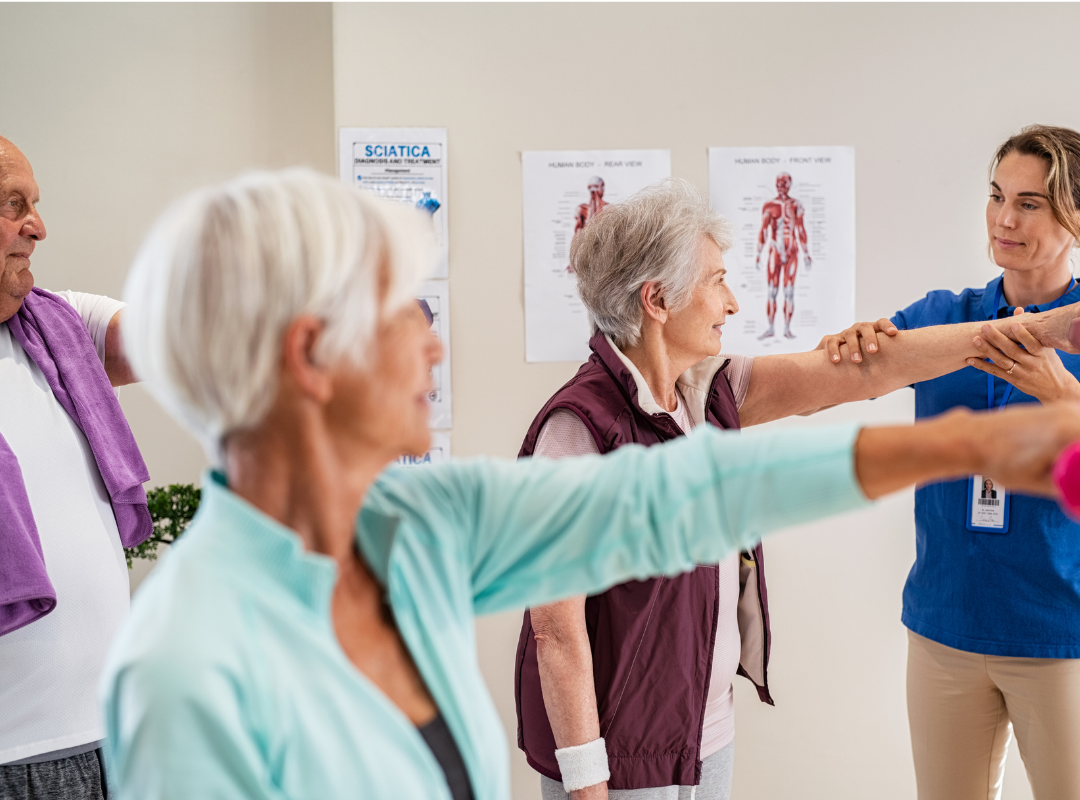
Exercise classes for seniors can support strength, balance, flexibility, endurance, and everyday movement when the activities match each participant’s abilities. A suitable class offers clear guidance, manageable pacing, and ways to adjust movements. The best choice is not always the hardest class. It is one you can participate in safely and consistently.
Classes can range from seated movement and gentle stretching to strength, balance, dance, and low-impact aerobic sessions. Understanding these differences can help you choose a class that fits your mobility, experience, and goals. It can also help families evaluate exercise opportunities within a senior living community.
What Are Exercise Classes for Seniors?
Exercise classes for seniors are guided movement sessions designed around the physical abilities, mobility needs, and fitness goals commonly experienced by older adults. Depending on the format, a class may include aerobic movement, strength training, balance activities, flexibility exercises, or a combination of several movement types.
The National Institute on Aging’s exercise guidance for older adults identifies aerobic, muscle-strengthening, and balance activities as important parts of physical activity for older adults. A class labeled for seniors is not automatically appropriate for every older adult. Some sessions are completed mostly while seated, while others involve supported standing or continuous low-impact movement. The pace, available modifications, instruction, and physical setting matter as much as the class name.
How Senior Fitness Classes Support Strength, Balance, and Flexibility
Well-rounded senior fitness classes often combine several types of movement because daily activities rarely depend on only one physical ability. An instructor might blend resistance exercises, posture work, controlled stepping, and stretching within the same session, allowing participants to practice different skills in a connected way.
Strength for Everyday Movement
Strength activities ask the muscles to work against some form of resistance. A class might use controlled body movements, light equipment, or repeated seated and standing patterns. The goal should be steady, manageable movement that matches the participant’s current ability.
Balance and Body Control
Balance activities may include posture work, weight shifting, controlled stepping, or supported standing. Some movements can be performed beside a chair or another stable surface. The National Institute on Aging’s balance exercise guidance explains that balance involves maintaining stability while still or moving and recommends including balance activities regularly.
Flexibility and Comfortable Motion
Flexibility and mobility exercises move the joints through a comfortable range. These movements may make it easier to reach, turn, bend, and change positions during daily routines. They should feel controlled, not forced.
The CDC’s overview of physical activity benefits recommends multicomponent physical activity for older adults that includes aerobic, muscle-strengthening, and balance activities. This combination can be completed at home or through a structured community program.
Types of Movement Classes for Seniors
Movement classes for seniors vary in pace, position, and purpose. Learning what each format generally involves can help you narrow your choices before attending.
Common options include:
- Chair-based movement: Primarily seated activities that may support mobility, coordination, flexibility, and strength.
- Strength or resistance classes: Controlled movements that challenge major muscle groups.
- Balance and stability classes: Posture, stepping, weight shifting, and body-control activities.
- Low-impact aerobic or dance classes: Continuous movement designed to raise the heart rate without high-impact actions.
- Combination classes: Sessions that include strength, balance, stretching, and aerobic movement.
Walking groups and tai chi-inspired sessions may also appeal to older adults who prefer steady movement or a less equipment-focused format. Class names vary, so find out what the session includes and whether seated, supported, or lower-intensity versions are available.
For a closer look at a seated format, explore these chair workouts for seniors. Chair-based movement may be a practical starting point for someone who wants more physical support or is returning to activity after time away.
Comparing Group Fitness Classes for Seniors by Mobility Level
Group fitness for seniors can work across different mobility levels when the class offers suitable movement positions, pacing, and modifications. Age alone does not determine which format will fit. Two people of the same age may have very different levels of endurance, balance, confidence, and exercise experience.
| Class format | Common movement position | Potential focus | Questions to ask |
| Seated movement | Primarily seated | Coordination, mobility, flexibility, and upper-body movement | Can every activity remain seated? |
| Seated with supported standing | Chair support available | Strength, balance, and position changes | Are standing movements optional? |
| Low-impact standing class | Mostly standing | Endurance, coordination, and strength | Are breaks and modified movements available? |
| Balance-focused class | Seated, supported, or standing | Stability, posture, and controlled stepping | What support is provided during balance work? |
| Combination fitness class | Varies throughout the session | Strength, balance, flexibility, and aerobic movement | How does the instructor adjust the class for different abilities? |
Some sessions involve following several steps, moving between seated and standing positions, or maintaining activity for a set period. Think about the participant’s ability to follow instructions, need for physical support, endurance, confidence while standing, and need for breaks.
Families sometimes focus on the program title and overlook the instructor’s approach. A general movement class with clear explanations and meaningful adaptations may be a better fit than a specialized class that offers few ways to adjust the activities.

What to Look for Before Choosing a Senior Fitness Class
A suitable class should make movement understandable, adaptable, and maintainable. The CLASS framework can help you compare senior fitness classes without relying only on program names.
- C – Clear instruction: Participants can understand each movement and follow the instructor’s pace.
- L – Level-appropriate movement: The activities match the participant’s current mobility, endurance, and experience.
- A – Adaptable options: Seated versions, stable support, lighter movements, and rest periods are available.
- S – Supportive setting: Participants can ask questions and work at their own level without pressure.
- S – Sustainable schedule: The time and format are practical enough to support regular participation.
Before attending, find out whether the session welcomes beginners, which parts are seated or standing, and what equipment is used. You may also want to know how long the class lasts, whether participants can pause, and whether you can observe a session first.
These questions reveal more than a simple description, such as “beginner” or “senior-friendly.” They help you understand how the class works in real situations, especially when several participants have different abilities.
Starting a Class When You Are New or Returning to Exercise
Beginners often do best when they first learn the class format and focus on controlled participation. You do not need to complete every movement at the same pace as everyone else. Using an available seated version, taking a break, or reducing the range of a movement can help you become familiar with the session.
Start with a level you can repeat. Notice how you feel during the class and afterward, before adding more time or intensity. The Office of Disease Prevention and Health Promotion’s guidance for older adults advises people who have been inactive to start slowly and notes that even five minutes of physical activity provides benefits.
There is no single beginner class that suits every older adult. A chair-based class may feel manageable for one person, while another may prefer a short standing or walking session. Health concerns, recent mobility changes, or uncertainty about suitable activity should be discussed with an appropriate healthcare professional before beginning a new routine.
How Often Should Older Adults Attend Senior Fitness Classes?
Class frequency depends on the intensity, duration, movements included, current activity level, recovery needs, and other activities completed during the week. A gentle flexibility session and a more demanding strength class place different demands on the body, so they should not automatically follow the same schedule.
The CDC physical activity guidelines for older adults recommend that adults age 65 and older work toward at least 150 minutes of moderate-intensity aerobic activity each week, along with muscle-strengthening activity on at least two days and activities that improve balance. The weekly aerobic total may be divided into smaller sessions.
These recommendations describe a complete weekly activity pattern, not a required number of fitness classes. Walking, household activity, individual exercise, and organized sessions may all contribute to a routine. According to the CDC report on physical activity among adults age 65 and older, 38.4% of adults age 65 and older met the aerobic physical activity guidelines in 2024, which highlights the value of building a realistic routine that can be maintained over time.
Consistency and variety are useful points to consider. Look at whether the overall week includes aerobic movement, strength, balance, and time to recover. Individual guidance may be needed when health conditions, mobility concerns, or other physical activities affect the schedule.
Finding Movement, Connection, and Support at Heather Hills
At The Village of Heather Hills in Grand Rapids, residents can participate in exercise and movement classes within a wider calendar of social, creative, and recreational opportunities. Community gathering spaces, activity rooms, and social areas provide settings for programs, events, and time with visitors, while on-site rehabilitation and therapy services are also available. Residents may also enjoy live music, arts and craft sessions, games, movies, choir practice, creative workshops, local trips, and seasonal events. You can explore the community’s amenities and daily-life features or learn about its Independent Living and Assisted Living options.
Choosing a class begins with understanding your abilities, preferences, and the type of setting where you feel comfortable participating. The Lifestyle Assessment can help you consider the routines and community features that may fit you or a loved one. You can also schedule a personal tour to view the shared spaces, ask about current exercise and movement classes, and decide whether the community supports the lifestyle you are seeking.
Frequently Asked Questions
What should older adults look for when choosing exercise classes for seniors?
Older adults should look for clear instructions, suitable pacing, and movements that match their current abilities. Ask whether seated options, stable support, rest periods, or other modifications are available. The class setting should make it comfortable to ask questions and work at an individual pace. A class that feels manageable and enjoyable is often easier to attend consistently.
How do senior fitness classes support strength, balance, and flexibility?
Senior fitness classes may combine resistance movements, controlled stepping, posture work, stretching, and low-impact aerobic activity. Strength supports everyday actions such as standing and reaching, while balance supports stability during movement. Flexibility helps maintain a comfortable range of motion. A combination class may address several of these abilities in one session.
Are group fitness classes for seniors suitable for different mobility levels?
Some group fitness classes for seniors are suitable for different mobility levels, but the available modifications determine the true fit. A class may offer seated movements, supported standing, reduced ranges of motion, or additional breaks. Ask how the instructor works with participants who have different levels of endurance or balance. Each participant should be able to work at a suitable pace without pressure to match others.
What types of movement classes for seniors are appropriate for beginners?
Chair-based movement, gentle stretching, beginner balance sessions, walking groups, and low-impact combination classes may be worth exploring. The best beginner option depends on the person’s mobility, confidence, endurance, and previous exercise experience. Ask what positions and movements the class uses before attending. Starting with a manageable session can make it easier to learn the format and build consistency.
How often should older adults participate in senior fitness classes?
Older adults should choose a class frequency that fits the session’s intensity, their current activity level, and their recovery needs. Organized classes are only one part of a complete weekly activity routine. Strength, balance, flexibility, aerobic movement, and other daily activities may all contribute. A healthcare or qualified fitness professional can provide individual guidance when health or mobility concerns affect participation.
Both my Aunt and Mom lived at Heather Hills during their final years. Both were treated with respect, love and dignity. This place isn’t a facility, it is a family! It has been over a year since we have had a family member there, but we have lifetime friends we made at Heather Hills. I am so glad we made the right decision in choosing Heather Hills!
Family of Resident