616.942.1990
 Grand Rapids, MI
 616.942.1990
 Grand Rapids, MI



A senior choir is a singing group created for older adults, with music, practices, and participation shaped around members’ interests and abilities. You do not always need vocal training or performance experience to join. The focus may include musical expression, friendship, shared goals, and an enjoyable reason to gather each week.
At The Village of Heather Hills in Grand Rapids, choir practice is one of several ways residents can take part in community life. Here, you will learn what senior choir involves, whether you can begin singing later in life, how music may be selected, and what to look for in a well-rounded activity program.
What Is a Senior Choir?
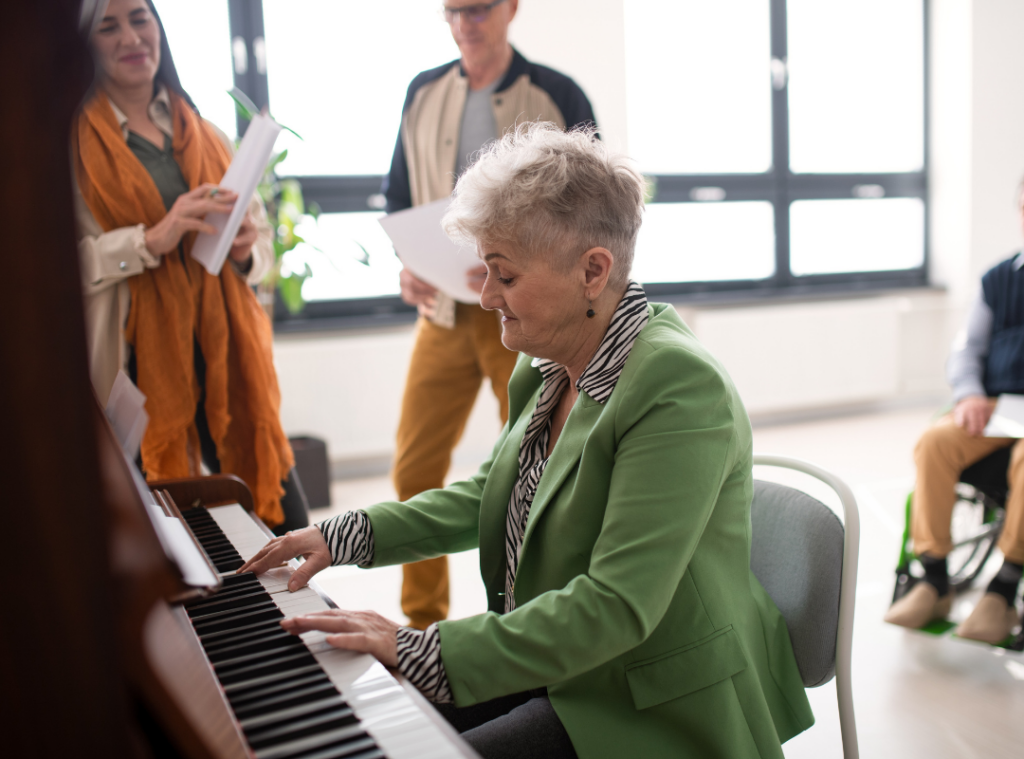
A senior choir is a group singing activity organised for older adults. It may include guided warmups, regular practices, familiar songs, seasonal programs, informal sing-alongs, or community performances. Some choirs prepare for scheduled events, while others place more emphasis on participation and enjoyment.
Senior choir differs from attending a live music performance. Listening gives you a chance to enjoy music as an audience member. Choir practice invites you to help create the music with others. You may sing as part of the full group without performing a solo, memorising every song, or reading sheet music.
Why Singing Together Can Add Purpose to Daily Life
Singing with a group can give your week a welcome sense of rhythm. You have a practice to anticipate, songs to learn, and a shared activity that makes it easier to spend time with neighbours. A familiar melody can also start conversations that may not happen during a less interactive event.
Purpose does not have to come from a formal concert. It may come from learning a verse, encouraging another singer, helping choose a song, or joining a seasonal celebration. The National Institute on Aging encourages older adults to take part in enjoyable social and productive activities that support connection and engagement.
Research also offers useful context without suggesting that choir guarantees a health outcome. One randomised community choir study involving 390 adults age 60 and older found that choir participants showed greater improvements in loneliness and interest in life after six months than the comparison group. Researchers found no significant differences in cognitive or physical outcomes. A 2024 review of interventions for social isolation and loneliness also found that older adults who participated in choir and other community group programs reported decreased loneliness and social isolation.
Can You Learn to Sing at 70 or Later?
Yes, you can begin learning to sing at 70 or later. The National Institute on Aging explains that older adults can continue learning new skills. Early singing practice may focus on comfortable breathing, listening, repeating simple melodies, following lyrics, and blending your voice with a group. The goal does not have to be professional-level singing.
You may hesitate because you have never taken a lesson, cannot read music, or feel that your voice has changed. You may also prefer to sit during practice or avoid singing alone. Those concerns do not automatically prevent you from enjoying a group program. The right questions are whether the activity matches your comfort level and whether you can participate without unnecessary pressure.
What Beginners Can Expect at Choir Practice
A beginner-friendly practice may use simple warmups, repeated sections, printed lyrics, and group instruction. The exact format varies, so ask how new singers are introduced to the music and whether public performances are optional.
The National Institute on Aging reports that participation in music and other arts has shown promise for quality of life, well-being, and social interaction, though more research is still needed. That balanced view matters because music can be meaningful without being treated as medical care.

What Songs Do Older Adults Enjoy Singing?
There is no single list of songs that every person in their 70s enjoys. Musical taste reflects your background, memories, culture, faith traditions, and personal interests. Age alone does not determine which music feels familiar or meaningful.
Senior choirs may explore familiar popular standards, folk music, show tunes, seasonal selections, hymns, patriotic music, or songs connected to important moments in life. A thoughtful program also makes room for different tastes instead of assuming everyone wants the same playlist.
A Better Framework for Choosing Choir Music
Useful song choices often balance four considerations:
- Familiarity: Can participants recognise or learn the melody?
- Singability: Is the arrangement comfortable for the group?
- Meaning: Does the music inspire interest, memories, or conversation?
- Variety: Does the selection reflect different preferences and occasions?
These questions are more useful than choosing songs based only on age. They keep the focus on the people singing and the experience the group hopes to create.
Senior Choir Compared With Other Community Activities
Senior choir is one form of engagement, not the only option that matters. A varied calendar gives you different ways to participate depending on your interests, energy, and preferred social setting.
| Activity | Main Type of Engagement | Social Format | What You May Enjoy |
| Senior choir | Music and group participation | Collaborative | Singing, practicing, and contributing to shared programs |
| Arts and craft sessions | Creative, hands-on activity | Individual or group | Making something and exploring personal creativity |
| Jeopardy-style trivia | Knowledge and friendly competition | Group | Answering questions and sharing ideas |
| Exercise and movement classes | Physical participation | Group | Following guided movement with others |
| Bingo and game nights | Recreation | Group | Casual play and conversation |
| Creative workshops and discussions | Learning and expression | Group | Exploring ideas and exchanging perspectives |
| Museum and historical-site trips | Cultural and local exploration | Group outing | Visiting places beyond the community |
These senior community activities serve different purposes. Choir may appeal to someone who enjoys music and teamwork, while crafts may suit a person who prefers a quieter creative task. Trivia, games, classes, and outings offer other ways to connect.
The strongest approach is choice. Assisted living activities for seniors should not make everyone follow one social routine. Activities, gathering spaces, and practical support can work together to help residents shape a daily life that reflects their interests.
How Families Can Evaluate a Senior Choir and Activity Program
A good activity program offers clear expectations, comfortable spaces, meaningful choices, and more than one way to participate. During your research or visit, ask questions that reveal what daily involvement actually looks like.
Helpful questions include:
- How often does choir practice take place?
- Is previous singing experience required?
- Can someone join without performing publicly?
- How are songs selected?
- Are residents able to suggest music?
You can also ask whether the practice area is comfortable, how new residents learn about activities, and what musical options exist beyond choir. Look at the full calendar as well. Creative, physical, recreational, cultural, and social choices can help residents find activities that match their own pace and interests.
A printed list tells you what is offered, but it may not show how often an activity occurs or how residents take part. A community visit gives you a better chance to ask practical questions and see whether the setting feels welcoming.
How Activities and Amenities Shape the Full Resident Experience
Activities are only one part of daily community life. The most useful senior living amenities connect personal interests with shared spaces, everyday convenience, available support, and opportunities to spend time with others.
Community gathering spaces can host programs and visitors, while activity rooms and social areas give residents places to join organised or informal events. Live music performances complement choir practice by creating another way to enjoy music. Chef-prepared meals served three times a day also give residents regular opportunities to gather.
Other features may affect how easy it is to follow a preferred routine. At The Village of Heather Hills, weekly housekeeping can reduce household responsibilities, and on-site transportation is available for appointments and local attractions. Cable TV and Wi-Fi support entertainment and connection.
Independent Living may appeal to someone who wants fewer household duties and more opportunities for social participation. Assisted Living combines community life with approved support such as 24/7 wellness staff and care aides, medication assistance, wellness checks, and an emergency response pendant system. You can explore the community’s Independent Living and Assisted Living care offerings, use the care assessment to think through which option may fit your current needs, or review floor plans and pricing as you compare your options.
Music and Community Life at The Village of Heather Hills
The Village of Heather Hills, located at 1055 Forest Hills Ave SE in Grand Rapids, Michigan, offers Independent Living and Assisted Living with opportunities for musical, creative, recreational, and social participation. Residents can take part in choir practice and musical expression, attend live music performances, or join non-denominational music services. Other options include arts and craft sessions, trivia, exercise and movement classes, movies, games, creative workshops, discussion groups, seasonal events, and trips to local attractions.
Meaningful community life looks different for each person. The lifestyle assessment can help you consider which activities and daily experiences matter most to you. To learn how music and other programs fit into an ordinary week, schedule a tour and bring your questions about participation, activity choices, and community life.
Frequently Asked Questions
What is senior choir?
A senior choir is a group singing activity created for older adults. It may include rehearsals, warmups, sing-alongs, seasonal programs, or performances. Programs can welcome people with different levels of singing experience. The main focus may be music, participation, friendship, or a combination of all three.
Can a 70-year-old learn to sing?
Yes, a 70-year-old can begin learning to sing. Practice may involve comfortable breathing, melody work, listening, repetition, and singing with a group. You do not have to become a soloist or professional performer to enjoy the process. Ask whether the program welcomes beginners and adapts participation to different comfort levels.
What songs do 70-year-olds like?
People in their 70s have many different musical preferences. They may enjoy popular standards, folk music, show tunes, hymns, seasonal selections, patriotic music, or songs connected to personal memories. Culture and life experience often matter more than age alone. A well-planned choir program considers familiarity, singability, meaning, and variety.
Do you need experience to join a senior choir?
Not always. Many community-based choirs may welcome beginners and focus on shared participation rather than formal training. Requirements differ, so ask whether you need to read music, audition, memorize songs, or perform publicly. Clear expectations can help you decide whether the group feels comfortable.
How does choir fit with other senior community activities?
Choir provides collaborative musical participation and a recurring chance to gather with others. Arts and crafts, trivia, exercise, movies, games, workshops, discussions, and outings offer different forms of engagement. A varied calendar allows you to choose activities based on your interests and preferred pace. The best fit is a program that gives you meaningful options without pressure.
Both my Aunt and Mom lived at Heather Hills during their final years. Both were treated with respect, love and dignity. This place isn’t a facility, it is a family! It has been over a year since we have had a family member there, but we have lifetime friends we made at Heather Hills. I am so glad we made the right decision in choosing Heather Hills!
Family of Resident